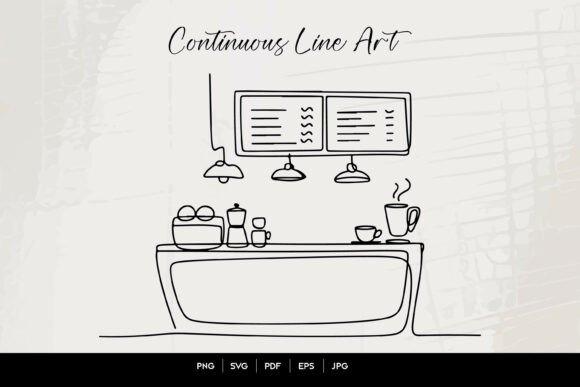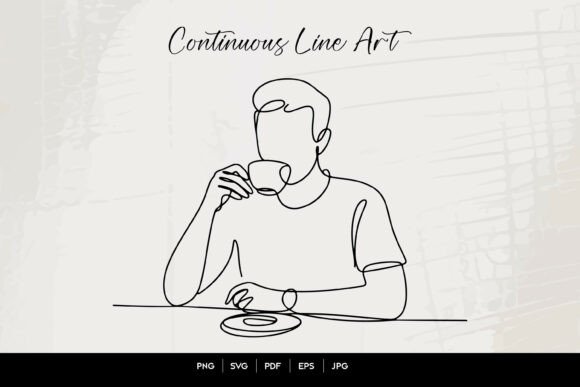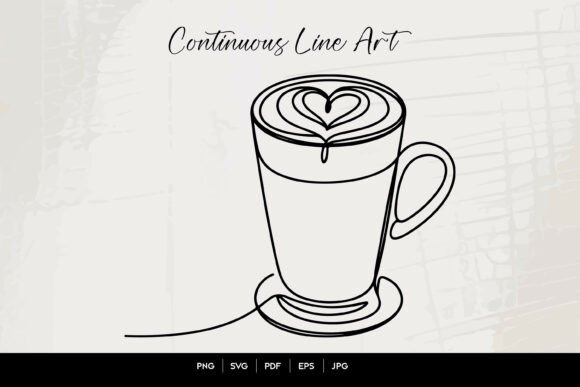
Continuous Line Coffee Machine
A Designer’s First Glance: Clean, Calm, and Confidently Minimal
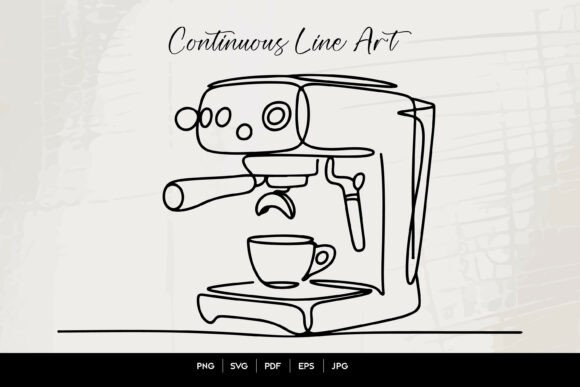
When I opened the Continuous Line Coffee Machine files—PNG, SVG, EPS, PDF, JPG—I wasn’t looking for flash. I was looking for flow. And it delivered: a single, unbroken line tracing the silhouette of a sleek espresso machine, with subtle nods to portafilters, steam wands, and rounded tank contours. No shading, no outlines, no fill areas—just one elegant, rhythmic stroke. It feels modern without being cold, playful without being cutesy. That’s rare in coffee-themed embroidery files, where so many default to cartoon mugs or overworked barista scenes. This one breathes.
Where It Lives Best: Tote Bags, Aprons, and Thoughtful Gifts
Last week, I prepped a custom embroidered tote for a local café’s staff appreciation day—and reached straight for Continuous Line Coffee Machine. Why? Because on natural canvas or heavyweight cotton twill, its simplicity translates into clarity at 3.5" wide. No dense fill stitches to pucker the fabric; no tiny loops that vanish under thread tension. Just clean running stitch potential (or a light satin border if you’re converting it for machine embroidery). I stitched it on the lower left corner of a cream linen-blend apron—paired with soft grey thread—and customers paused mid-café line to ask where it was from. That’s the quiet power of restraint: it invites attention without shouting.
Real-World Fit Across Your Craft Business
- Custom apparel: Works beautifully on sweatshirts and crewnecks—especially when placed off-center or along a sleeve seam. Avoid tight ribbing or highly stretchy jersey unless you stabilize aggressively.
- Embroidered patch: Excellent candidate for heat-applied or sew-on patches. Its continuous line minimizes jump stitches and keeps backing clean.
- Baby embroidery: Gentle enough for onesies and burp cloths—but test stitch density first. A lighter stitch count prevents stiffness near delicate skin.
- Holiday & gift embroidery: Paired with neutral thread on oatmeal tea towels or charcoal pillow covers, it reads as warm, intentional, and quietly sophisticated—not seasonal gimmickry.
- Etsy seller & small shop product: Stands out in digital mockups. Looks equally strong on a printable label, a minimalist packaging sticker, or as part of a curated “coffee lover” bundle.
Where to Pause—and Plan Ahead
This isn’t a “drop-in-and-stitch” design for every surface. Its elegance depends on execution. On caps or curved hats, the line’s smooth arcs can distort if hooping isn’t precise—so always test on scrap with your exact cap frame. On dark fabric, avoid fine white thread unless you’re using a high-contrast stabilizer underneath; the line’s thinness needs support to stay legible. And on textured fabrics like terry cloth or bouclé, consider simplifying the file further—or switching to a slightly bolder stroke width before digitizing. The original Continuous Line Coffee Machine is minimal by intent, not by oversight—so respect its scale.
Design Integrity Meets Customer Trust
When someone buys a handmade product with this design, they’re not just buying coffee iconography—they’re buying intention. That matters. A well-executed Continuous Line Coffee Machine signals care: in placement, thread choice, fabric pairing, and finishing. It elevates a basic tote into a boutique item. It turns a baby onesie into a keepsake. And for Etsy sellers, that perceived value directly impacts reviews, repeat buyers, and word-of-mouth referrals. Customers notice when a design doesn’t fight the fabric—or their expectations.
Your Practical Checklist Before Stitching
- Test the Continuous Line Coffee Machine on scrap fabric *first*—same weight, same weave, same stabilizer you’ll use on the final piece.
- Check thread color contrast against both light and dark backgrounds. What reads cleanly on white may disappear on navy.
- Review stitch density if converting to an embroidery file. Continuous lines often digitize best with consistent 0.8–1.2mm stitch length—avoid over-tracing corners.
- Confirm hoop size compatibility. At full scale (approx. 3–4"), it fits standard 4x4 hoops—but verify before framing.
- Inspect small details in vector format (SVG/EPS) to ensure no unintended breaks or anchor points disrupt the flow.
- Try black-and-white mockups. Does the shape hold up without color crutches?
- Use tear-away + cut-away stabilizer combo for structured items like aprons or tote bags—especially with heavier thread.
- Double-check licensing terms. As a Graphics asset in the Crafts category, confirm whether commercial use (e.g., selling finished embroidered goods or digital bundles) is permitted.
Final Thought: Less Line, More Meaning
The Continuous Line Coffee Machine won’t dominate a garment—but it doesn’t need to. Its strength is in cohesion: with a well-chosen thread, thoughtful placement, and honest craftsmanship, it becomes a quiet signature. For makers who value clarity over clutter, precision over padding, and meaning over motif—it’s not just another coffee design. It’s a design that earns its space.