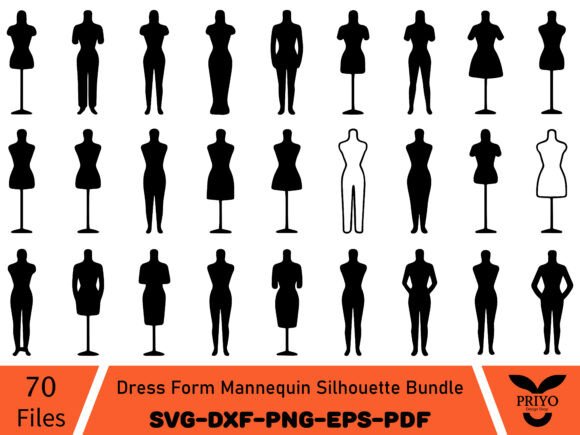
Dress Form Mannequin Silhouette Bundle
A Clean, Confident Shape—Not Just Another Outline
First glance at the Dress Form Mannequin Silhouette Bundle tells you it’s designed with intention—not just as a placeholder shape, but as a quiet statement. It’s lean, balanced, and intentionally uncluttered: no exaggerated curves, no fussy details, no forced “cute” elements. That simplicity is its strength. As an embroidery designer who’s stitched hundreds of fashion-related motifs—from garment tags to boutique aprons—I immediately saw how this silhouette holds space without shouting. It reads as professional, elegant, and quietly aspirational—ideal for makers who sell custom apparel, handmade totes, or nursery decor where subtlety builds trust.
Real-World Test: Embroidering a Linen Tote for a Local Boutique
Last week, I prepped a limited-run linen tote bag for a small-town clothing boutique. Their brand voice is minimalist, thoughtful, and fabric-forward—so I chose the Dress Form Mannequin Silhouette Bundle as a subtle signature motif near the hem. Not centered. Not oversized. Just 3.2 inches tall, left-aligned, in matte black thread on natural linen. The result? Customers paused. They ran their fingers over the smooth satin stitch contour and asked, “Is that *your* design?” That’s the power of a well-placed, well-executed silhouette—it doesn’t need text to communicate craft, care, or cohesion.
Where This Design Truly Shines
- Custom apparel: Works beautifully on sweatshirt hems, sleeve cuffs, or back yokes—especially when paired with a single word like “STUDIO” or “MADE” in clean sans-serif.
- Embroidered patch: Its clean lines translate cleanly into sew-on patches for denim jackets or aprons—no fill-stitch bleed, no fragile corners.
- Baby embroidery: On organic cotton onesies or muslin swaddle blankets, it reads as gentle and gender-neutral—no frills, no assumptions.
- Holiday embroidery: Stitched in metallic gold on charcoal tea towels or velvet pillow covers, it becomes quietly festive—not literal, but seasonally refined.
- Etsy seller & small shop product: Perfect for branding consistency across digital mockups, printed hang tags, *and* physical embroidery—making your shop feel unified, not pieced together.
Where to Pause—and Plan Ahead
This isn’t a one-size-fits-all embroidery file. Its elegance depends on thoughtful execution:
- Small hoop sizes: At under 4 inches wide, it fits standard 4x4 hoops—but check the actual dimensions in your software. If your version includes optional labels or alternate poses, those may push limits.
- Textured or stretchy fabric: Linen, terry cloth, or lightweight knits demand extra stabilizer support—especially along the vertical spine and shoulder curve, where stitch tension can shift.
- Dark fabric: The silhouette relies on contour, not contrast—so avoid ultra-dense black thread on black fabric unless you add a subtle outline or backing layer.
- Curved surfaces (caps, hats): The straighter profile handles curvature better than highly articulated figures—but always test on a cap blank first.
- Frequent-wash items: If stitching for baby clothes or kitchen towels, confirm stitch density supports durability—tight satin stitches hold up better than sparse running-stitch versions for this shape.
What It Adds—Beyond the Stitch
The Dress Form Mannequin Silhouette Bundle elevates more than fabric—it elevates perception. When customers see this on a handmade product, they read intention. They assume quality control, design literacy, and attention to proportion. That matters for Etsy sellers competing in saturated categories like “custom tote bags” or “nursery embroidery.” It also strengthens brand consistency: use it once on a patch, again as a watermark on your printable mockups, and again as a subtle tag on a sweatshirt hem—and your visual language feels cohesive, not coincidental.
Practical Designer Notes Before You Stitch
- Test the machine embroidery design on scrap fabric matching your final project’s weight and weave.
- Check thread color contrast—not just on white, but on your actual base fabric (e.g., oatmeal linen, heather grey sweatshirt fleece).
- Review stitch density in your editing software—look for thin areas (like the neck or waistline) that may need slight reinforcement for commercial embroidery durability.
- Confirm hoop size compatibility—some versions include alternate layouts; verify which files are included before digitizing.
- Inspect small details: does the silhouette include optional internal lines (seam guides, darts)? Are those necessary—or do they clutter a minimal look?
- Test in black-and-white mockups to assess silhouette clarity without color distraction.
- Use cutaway or tear-away stabilizer based on fabric stability—not guesswork.
- If selling finished products or digital embroidery files, review licensing terms. This Graphics-category asset may have usage limits for resale or mass production—check before listing on Etsy or bundling into a craft business kit.
Final Thought: A Quiet Anchor in Your Design Toolkit
The Dress Form Mannequin Silhouette Bundle won’t go viral. It won’t scream from a trade show booth. But in the hands of a thoughtful maker—whether you’re embroidering a wedding gift apron, branding a craft fair booth, or building a cohesive line of handmade apparel—it becomes a quiet anchor. It says, “I understand form. I respect fabric. I value restraint.” And in today’s handmade market, that kind of quiet confidence sells—not just products, but trust.